
Last updated November 16, 2026
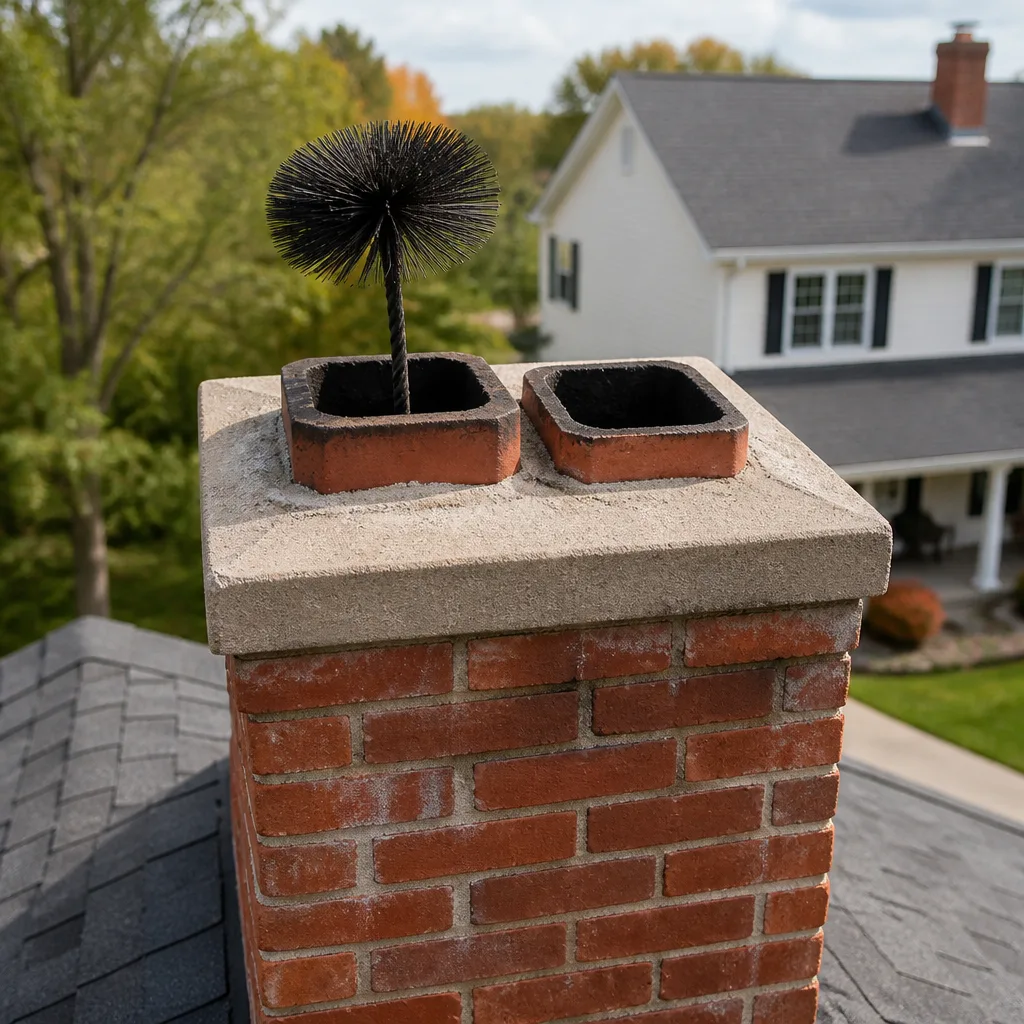 Sweep & inspection
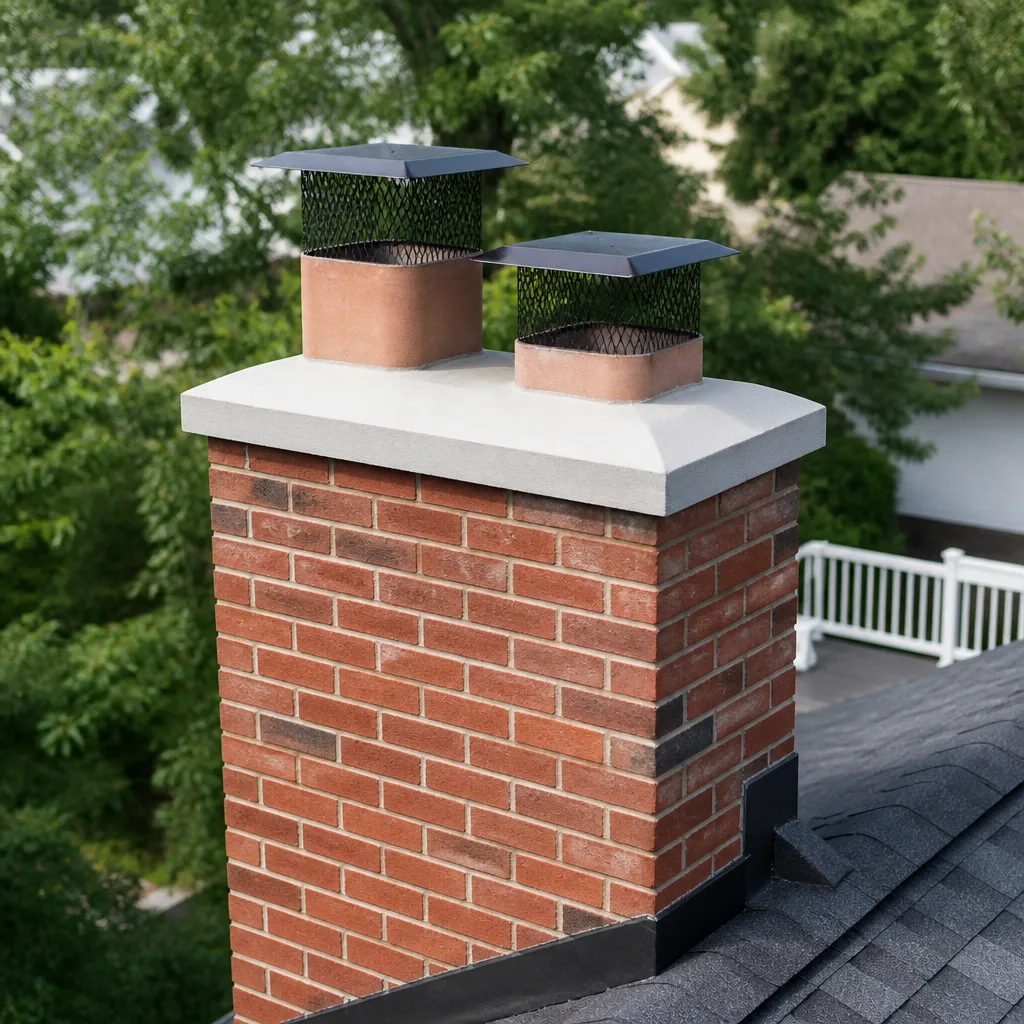 Caps & crowns
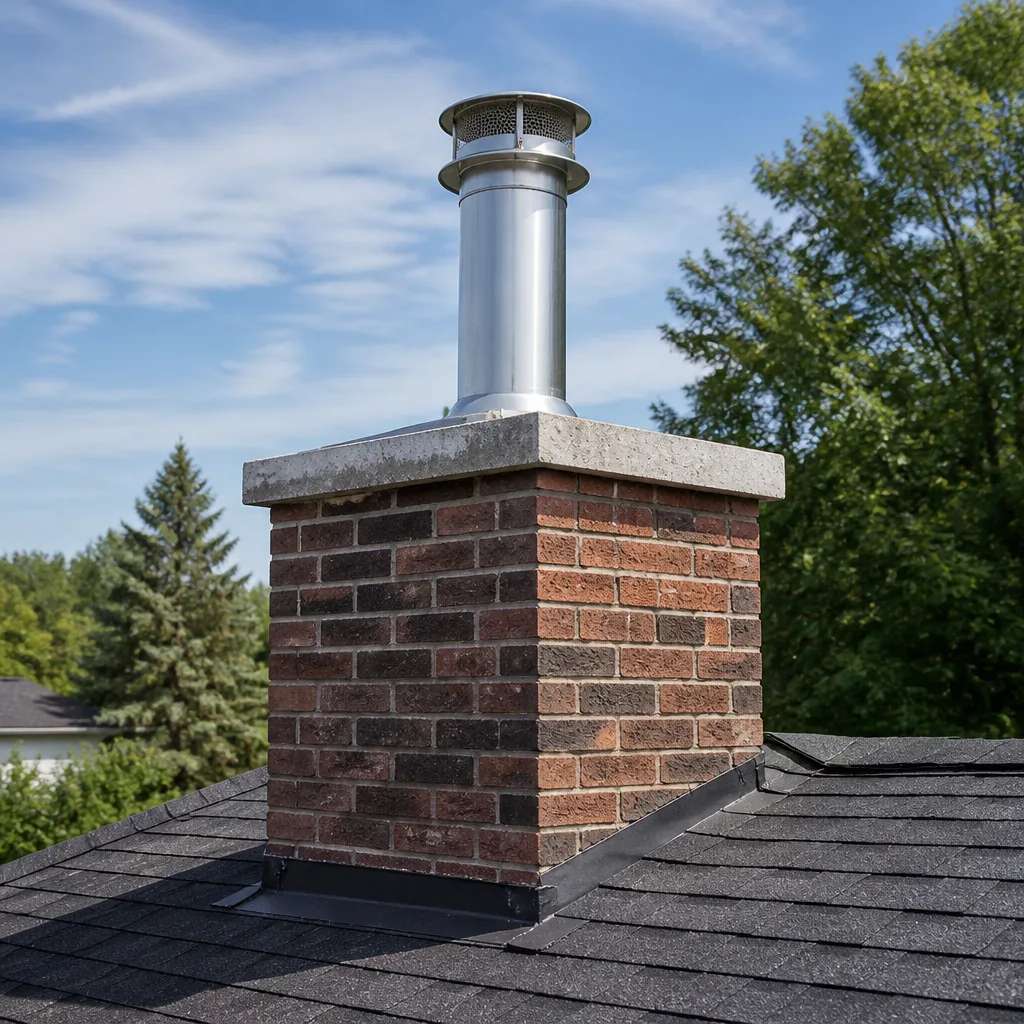 Flue relining
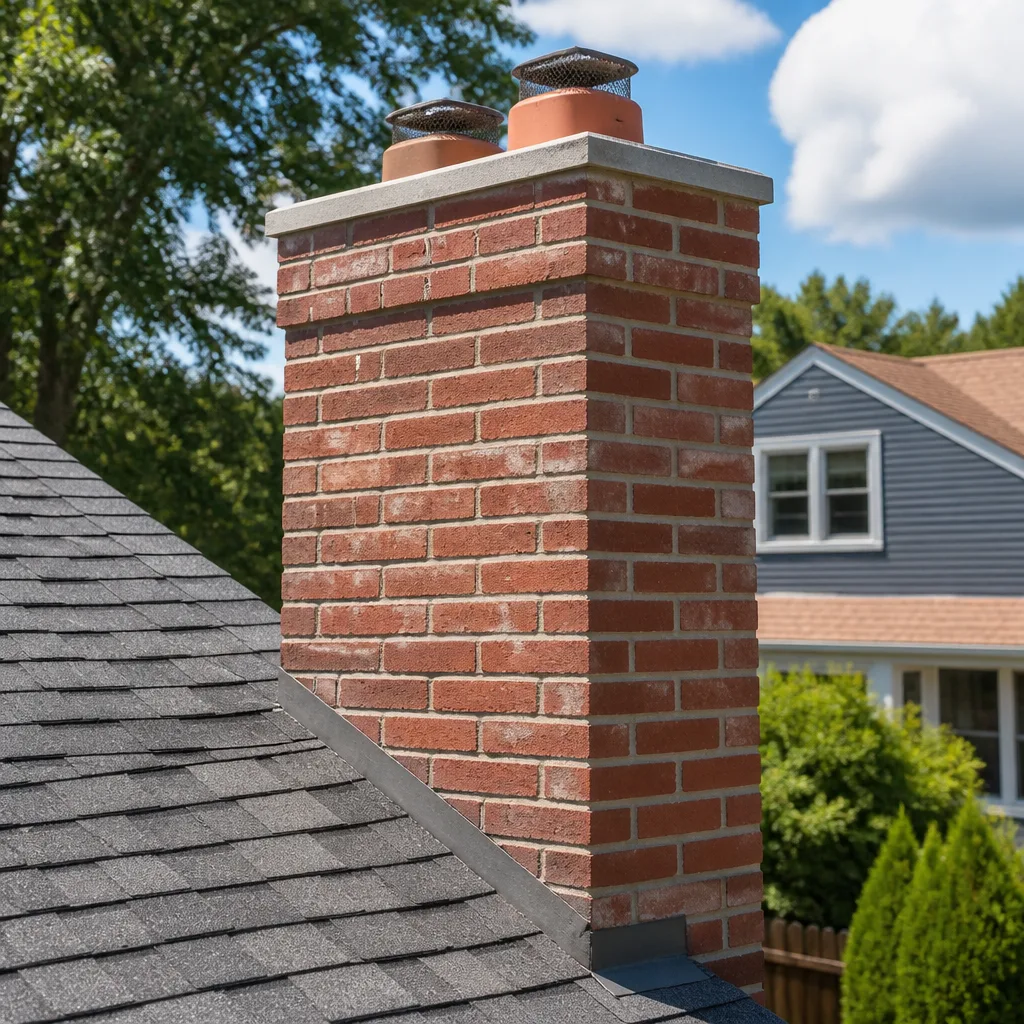 Masonry repair
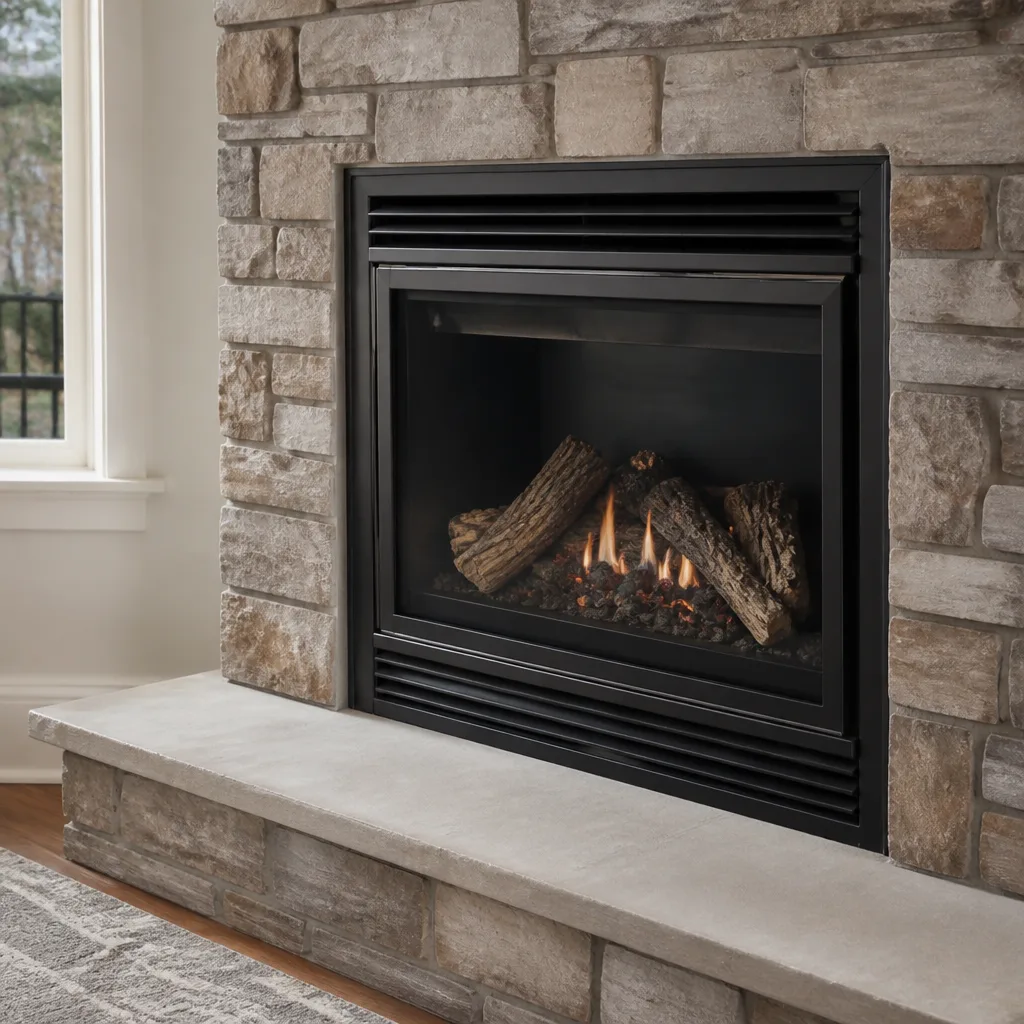 Gas fireplace service
Level 1 sweep and inspection to the NFPA 211 annual standard - flue, crown, cap, and flashing checked and photographed
Chimney sweep logs do not sweep chimneys. They loosen some creosote - which then falls where a brush and vacuum still have to collect it.
Chimney Inspection Troubleshooting in Norfolk: Common Problems and How to Fix Them
A homeowner who smells smoke in the living room and replaces the damper has probably spent money solving the wrong problem. In a lot of Norfolk homes, that smoke isn’t coming from a broken damper at all. It’s coming from negative air pressure, and no damper on the market will fix it. The same pattern shows up over and over: white staining gets painted over, a musty smell gets blamed on last winter’s rain, and a cracked crown gets patched with caulk. Each of those fixes treats a symptom. This guide maps what you actually see to what’s really going on inside the chimney system, so the money you spend goes to the source.
Quick Answer
Most chimney problems Norfolk homeowners notice – smoke backdraft, musty odors, white staining, crumbling mortar – are symptoms of a handful of structural or mechanical causes: negative air pressure, water intrusion at the crown or flashing, glazed creosote from incomplete combustion, or a failing flue liner. A proper chimney inspection identifies which cause is actually present before any repair is recommended. Fix the cause, not the symptom, and the problem stays fixed.
Styles & brands we work with
- Sweep & inspection
- Caps & crowns
- Flue relining
- Masonry repair
- Gas fireplace service
Table of Contents
- Symptom to Cause: Reading What Your Chimney Is Telling You
- White Staining Isn’t Age – It’s Water Getting In
- Why Backdrafting Happens in Norfolk’s Tighter Homes
- Creosote Smell vs. Mold Smell: Telling Them Apart
- What You Can Safely Check From the Ground
- Norfolk-Area Problems That Get Misdiagnosed
- How a Real Chimney Inspection Works
- Repair Options Once the Cause Is Known
Symptom to Cause: Reading What Your Chimney Is Telling You
Every chimney problem announces itself before it becomes expensive. The trick is knowing which announcement means what. Here’s the mapping we use when we inspect a chimney in Norfolk, and it’s the same mapping that should guide any homeowner deciding whether to call someone.
- Smoke rolling into the room when you light a fire: usually negative pressure in the house, a blocked or undersized flue, or a flue that’s too short for the roofline. Rarely the damper.
- White, powdery staining on the brick or mortar: water is moving through the masonry and depositing dissolved salts on the surface. Not cosmetic aging.
- A musty, earthy, damp smell: chronic water infiltration somewhere in the chase, smoke chamber, or flue.
- A sharp, acrid, tar-like smell: creosote buildup, often glazed, usually from incomplete combustion.
- Visible gaps, spalling brick faces, or crumbs of mortar on the roof: freeze-thaw damage or movement in the structure.
- Rust streaks or water stains on the firebox or damper: the crown or flashing has failed and water is running down the flue.
- A fire that’s hard to start and smokes heavily: poor draft, often tied to a cold flue, a blockage, or a house that’s too tight for the appliance.
Notice that none of those symptoms name the actual defect. That’s the point. A symptom is a signal, and a good inspection is really a process of elimination. We test for each possible cause in order and rule them out until one remains. That’s how you avoid paying for a repair that doesn’t address what’s actually wrong.
A standalone inspection is the cleanest way to get that answer without anyone trying to sell you a fix on the spot. If you want an objective assessment first, our Norfolk Chimney Cleaning team offers inspection as its own service, separate from any repair work.
White Staining Isn’t Age – It’s Water Getting In
When a homeowner points at white, chalky staining on the chimney and calls it “just aging,” they’re describing the look of the problem rather than the problem itself. That staining is efflorescence, and it’s a moisture signal. Water has entered the masonry, dissolved salts inside the brick and mortar, and carried them to the surface as it dried. The salt stays behind as a powder. Where there’s efflorescence, there’s water – and water in a chimney is the root cause of most of the structural damage we see.
In Norfolk, that water gets in through a short list of openings:
- The crown. The concrete cap on top of the chimney is supposed to shed water away from the flue. A hairline crack, a crown that was never sloped properly, or one that’s pulled away from the flue lets water run straight down the inside.
- Flashing. The metal or membrane where the chimney meets the roof is the most common leak point in any house. When flashing separates or the sealant fails, water tracks down the chase.
- Brick and mortar porosity. Older masonry absorbs water directly. Freeze-thaw cycles then push that water outward, and the brick face pops off. That’s spalling.
- A missing or damaged rain cap. Without a cap, rain falls straight into the flue.
Here’s where it gets misdiagnosed. Someone sees the staining and repaints or seals the brick. The paint traps moisture inside, the freeze-thaw cycle gets worse, and the spalling accelerates. The real repair addresses the entry point, not the surface. Repointing the crown, redoing the flashing, and in some cases restoring the flue interior with a product like HeatShield – a resurfacing system that seals cracks from the inside – is what actually stops the water. If your chimney shows efflorescence, ask the inspector to tell you specifically where the water is entering. If they can’t point to it, they haven’t found it yet.
Why Backdrafting Happens in Norfolk’s Tighter Homes
This is the one that catches people. A fire that smokes into the room in a newer, well-insulated Norfolk home often has nothing wrong with the chimney at all. The chimney is doing exactly what it’s supposed to do – it just can’t, because the house is fighting it.
A chimney drafts because warm exhaust rises and leaves through the top, and replacement air gets pulled in from somewhere. In an older, drafty house, that makeup air leaks in through gaps around windows, doors, and the attic. Seal a house up the way modern construction does, and the makeup air has nowhere to come from. Now when the furnace, the dryer, or a bath fan runs, it pulls air from wherever it can – often down the chimney. The flue becomes an air supply instead of an exhaust. Smoke follows.
What makes this hard to diagnose is that the chimney itself passes every physical test. The flue is clear, the liner is intact, the damper works. A sweep who only looks up the flue will find nothing and charge you for the visit. An inspector who understands house pressure will check for it.
Here’s what to look at:
- Does it only happen when other exhaust appliances run? A kitchen fan, a bathroom vent, or a clothes dryer pulling air at the same time is a strong signal.
- Is the house newer or recently weatherized? New windows, added insulation, and spray foam all reduce the natural air leaks a chimney depends on.
- Does the smoke start strong and then settle? A cold flue with no draft can smoke at startup and clear once it warms.
- Is the chimney short or on the wrong side of the roof? A flue that doesn’t clear the ridge by enough height can lose the pressure battle regardless of house tightness.
The honest answer here is that a chimney repair alone may not solve this. Sometimes the fix is a taller flue or a different cap. Sometimes it’s balancing the house’s air pressure with a dedicated makeup air source. A specialist who understands the difference between a chimney problem and a house-pressure problem will tell you which one you have. That’s part of why we inspect before we recommend – no upselling from the roof, and no repair sold for a problem that isn’t in the chimney.
Creosote Smell vs. Mold Smell: Telling Them Apart
Two smells get confused constantly, and the confusion is expensive because the fixes have nothing in common. Learn to tell them apart and you’ll know what kind of problem you’re dealing with before anyone comes out.
Creosote odor
Creosote is a tar-like byproduct of burning wood. When it builds up and especially when it glazes into a hard, shiny layer, the smell is sharp, acrid, and unmistakably smoky – like a campfire that’s been rained on. You’ll often notice it on warm, humid days when the chimney isn’t in use. Glazed creosote is the real problem because it’s the leading cause of chimney fires, and it doesn’t come off with a brush. It needs a chemical treatment followed by a proper chimney sweep to remove it safely.
Mold odor
Mold and mildew smell earthy, musty, and damp – closer to a wet basement than a campfire. That smell points to chronic water infiltration, often in the chase around the flue, the smoke chamber, or the masonry itself. If you smell mold, the water problem described in the efflorescence section is the likely source, and that gets worse with every freeze-thaw cycle.
How to tell which you have
- Check the firebox. Glossy, black, tar-like deposits on the walls point to creosote. White or greenish fuzz points to moisture and mold.
- Check the timing. A smell that’s strongest after a burn or on humid days is usually creosote. A smell that’s constant and worse in damp weather is usually mold.
- Check the damper and smoke shelf. Debris sitting back there holds moisture and feeds both problems.
- Look for the water. Staining, efflorescence, or rust confirms moisture is present, which strongly points to mold.
Either way, the fix starts with a camera inspection that reveals what’s actually inside the flue and chamber. A photo report lets you see the deposits for yourself instead of taking anyone’s word for it.
What You Can Safely Check From the Ground
You don’t need a ladder to gather useful information. In fact, we’d rather you didn’t get on one. Every year we see problems that homeowners could have flagged from the ground before they got worse. Here’s what’s safe to look at – and what each failure looks like.
Crown condition
Stand back and look at the top of the chimney. The concrete crown should be a solid, smoothly sloped cap that sheds water away from the flue. What to look for:
- Cracks: hairline cracks widen into real leaks with every freeze-thaw cycle.
- Separation: the crown pulling away from the flue leaves a gap water runs straight through.
- Crumbling or chipping: a crown that’s disintegrating has lost its ability to shed water and needs rebuilding.
- Flaking concrete on the roof: fragments on the shingles below are a clear sign the crown is failing.
Flashing
Where the chimney meets the roof, there should be metal flashing stepped into the brick and sealed. Look for lifting metal, gaps, or rust streaks running down the chimney. Any separation there is a direct path for water into the roof structure and the chimney chase.
Visible mortar gaps and spalling brick
Scan the brick faces. Are any of them popping off or crumbling? Are the mortar joints recessed, cracked, or missing chunks? Missing mortar is a structural signal, and spalling brick almost always means moisture has been getting in and freezing. A quick look with binoculars tells you a lot.
Cap and rain screen
Is there a cap over the flue? Is the spark screen intact or rusted through? A missing cap lets rain, debris, and animals straight into the flue. A rusted screen is a cheap fix that prevents an expensive one.
What you’re doing here is noting observations, not making a diagnosis. Write down what you see and, ideally, take photos. When a specialist comes out, those observations help them focus the inspection. If something fails the look test, don’t try to fix it yourself – especially anything involving the crown or the roof. Call a professional and let them assess it safely.
Norfolk-Area Problems That Get Misdiagnosed
Some problems show up in this part of Virginia more than others. Knowing them helps you ask better questions during an inspection and spot a diagnosis that doesn’t quite fit.
Hurricane strap-related crown cracking
In homes built or retrofitted with hurricane straps tying the roof structure together, the chimney crown sometimes cracks differently than it would in an unstrapped home. The roof moves as a unit under wind load, and the chimney takes the transferred motion at its weakest point – usually the crown, where concrete meets masonry. Standard patching doesn’t hold because the movement that caused the crack is still there. The right repair addresses the joint itself and accounts for how the structure moves.
Brick spalling from freeze-thaw in January and February
Norfolk winters bring repeated cycles of freezing nights and thawing days. That’s harder on brick than a steady deep freeze, because water pushes into the pores on the thaw and expands on the freeze, over and over, until the brick face gives way. If you notice spalling that seems to have gotten noticeably worse after a cold snap, this is the pattern. Catching it early means repointing and stopping further water entry, not replacing entire sections of masonry.
Deteriorated pre-fab zero-clearance fireboxes
A lot of homes built in the 1980s and 90s have factory-built metal fireboxes rather than masonry. These corrode, their liners crack, and their doors and dampers wear out on a predictable timeline. Because they’re designed as a unit and tested as a unit, they can’t be patched with masonry, and the material that goes back in has to match the manufacturer’s spec. This is one of the most commonly misdiagnosed situations we see – a homeowner is told they need a “rebuild,” when what’s actually needed is an inspection to confirm whether the firebox can be re-lined or has reached the end of its service life. Our chimney repair work handles both cases, and we always start with inspection to find out which.
How a Real Chimney Inspection Works
A chimney inspection isn’t a quick look up the flue with a flashlight. The recognized standard has three levels, and knowing them helps you make sure you’re getting the right depth of assessment for your situation.
- Level 1 inspection: the baseline. This is what happens with a routine sweep or a regular checkup. It covers the readily accessible portions of the chimney, firebox, and vent connection, and it’s right for a chimney in regular use that hasn’t changed.
- Level 2 inspection: what you need after a chimney fire, when you change fuel type or appliance, when you buy or sell a home, or when you’re troubleshooting a recurring problem. It includes a camera scan of the flue and a closer look at the crown, flashing, and chase, usually with photos or video.
- Level 3 inspection: the most involved. This may require access to concealed areas of the chimney structure – behind walls or in the chase – and is used when a Level 2 reveals a problem that can’t be assessed otherwise.
For a homeowner tracking down a symptom like backdraft, odor, or staining, a Level 2 inspection with a camera scan is usually the right starting point. The photo report matters: it lets you see the cracks, the deposits, and the water entry yourself rather than relying on a verbal description.
Our technicians have up to 15 years of experience, and we inspect before we recommend any repair. We offer chimney inspection as a standalone service so an assessment is never locked to a sales pitch. If you’re not sure whether you need a full inspection or just a sweep, we’ll tell you honestly.
Repair Options Once the Cause Is Known
Once an inspection identifies the real cause, the repair path usually becomes clearer than you’d expect. Liner problems don’t automatically mean demolition, and masonry damage doesn’t always mean rebuild. What matters is matching the repair to the specific failure.
- Cracked or damaged flue liner: for many masonry flues, resurfacing with a ceramic-based system like HeatShield restores the liner by sealing cracks and rebuilding an even inner surface. It’s a repair, not a replacement, and it avoids demolition.
- Flue that needs replacement: when the original liner is beyond resurfacing, a stainless flexible liner such as a DuraFlex system can be installed inside the existing chimney. It restores a safe, proper flue with the structure of the chimney intact.
- Crown damage: a cracked or separated crown gets rebuilt and properly sloped so water sheds away from the flue.
- Flashing leaks: separated or failed flashing is re-established and sealed at the roof line.
- Creosote: glazed creosote is chemically treated and removed by sweep, not scraped.
- Deteriorated firebox: depending on the type, repairs use materials designed to match what the manufacturer specified.
The materials matter here. We stock and install products from brands chimney professionals rely on daily – HeatShield and DuraFlex among them – rather than substituting whatever’s on hand. That’s how a repair lasts. And because we offer the full span of the work, an issue found during an inspection or sweep can be resolved without handing you off to a second contractor. From first inspection to final repair, one specialist, one call.
Common Mistakes to Avoid
- Replacing the damper first. Smoke rolling into the room is usually a pressure or draft problem, not a damper problem. Replacing the damper treats the symptom and leaves the cause intact.
- Painting over efflorescence. White staining means water is moving through the masonry. Paint traps that water inside and accelerates spalling.
- Ignoring musty smell in Norfolk’s humid months. A damp, earthy smell points to chronic water infiltration, and the problem grows worse with every freeze-thaw cycle.
- Mistaking creosote for mold, or the reverse. The two smells have different causes and different fixes. A camera inspection tells them apart.
- Skipping inspection after a chimney fire. Even a small chimney fire can crack the liner. A Level 2 inspection is the standard next step.
- Assuming a “rebuild” is the only option for a damaged flue. Liner resurfacing with HeatShield or a stainless liner such as DuraFlex often restores a flue without demolition.
- Putting off a sweep because the fire “seems fine.” Creosote buildup is invisible from the living room. The chimney sweep is the only reliable check.
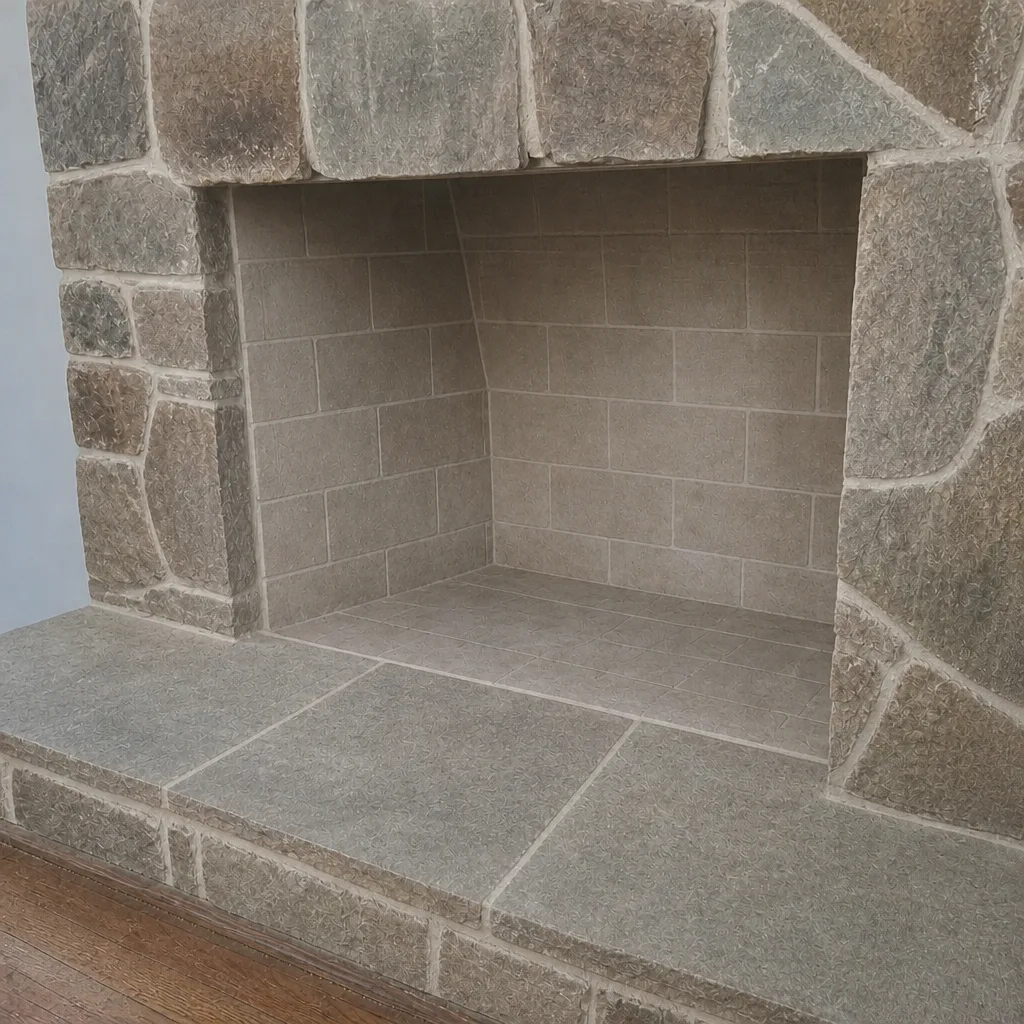
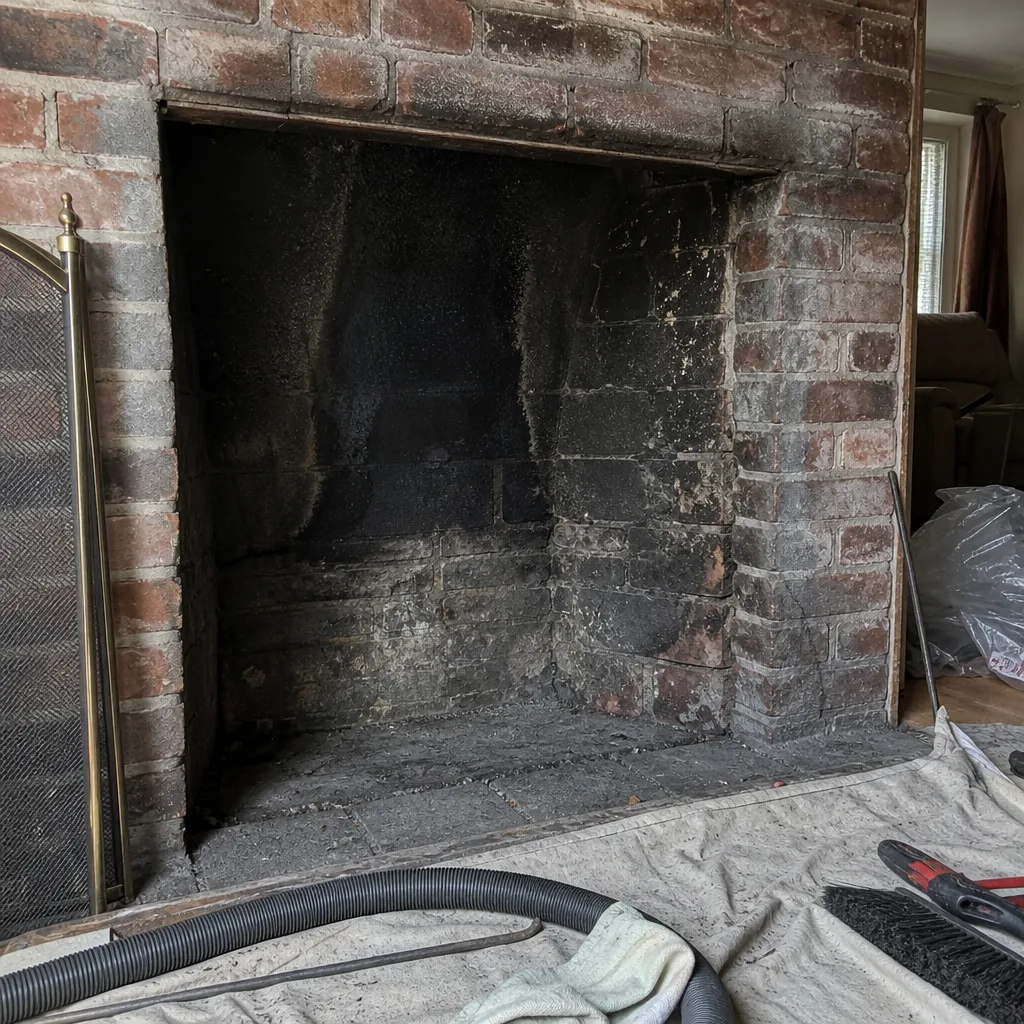
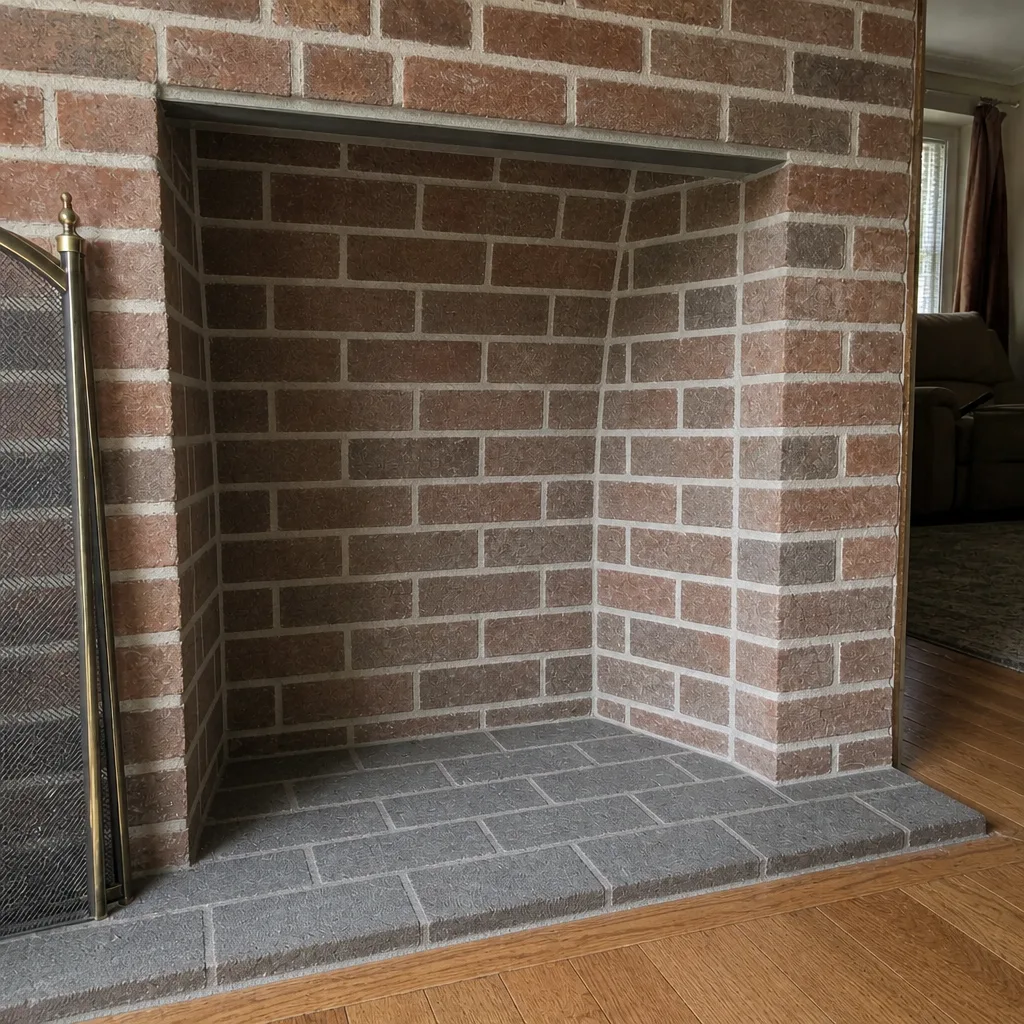
See the difference
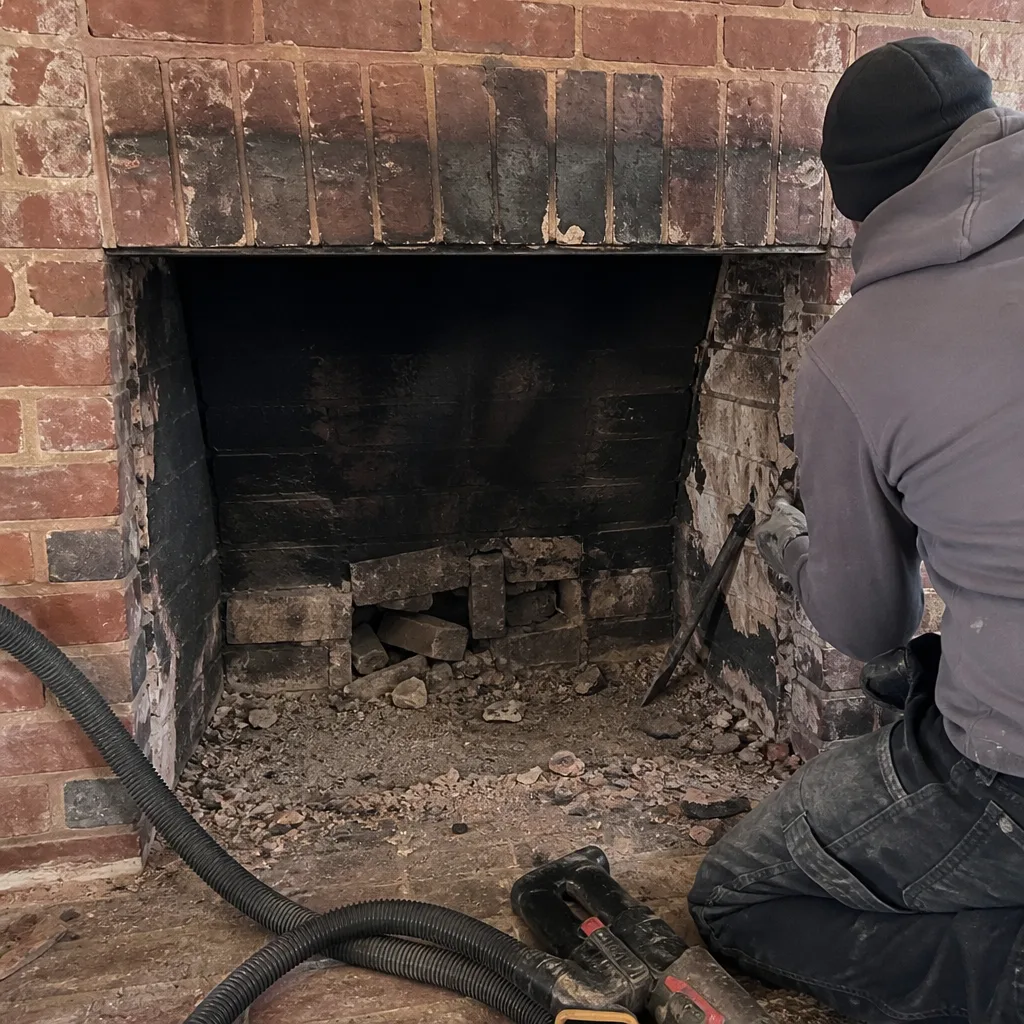 Before
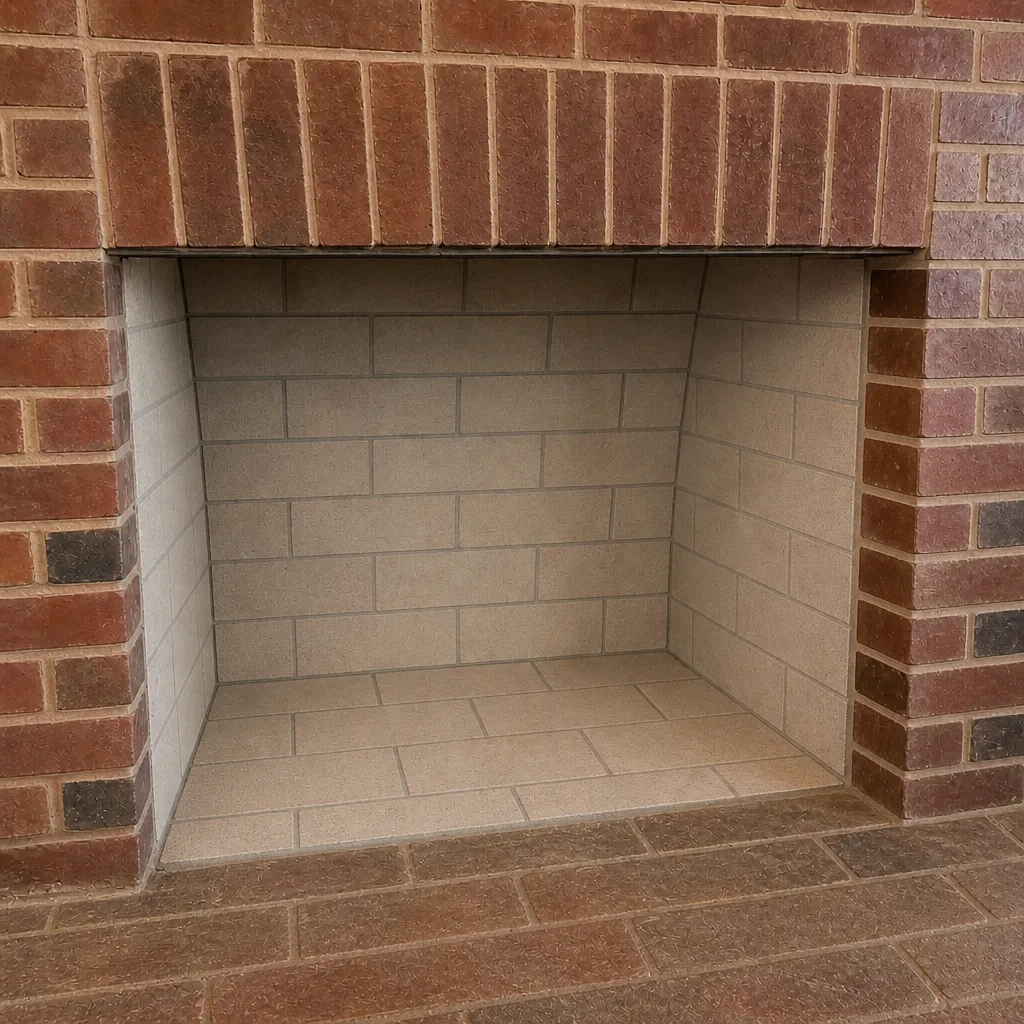 After
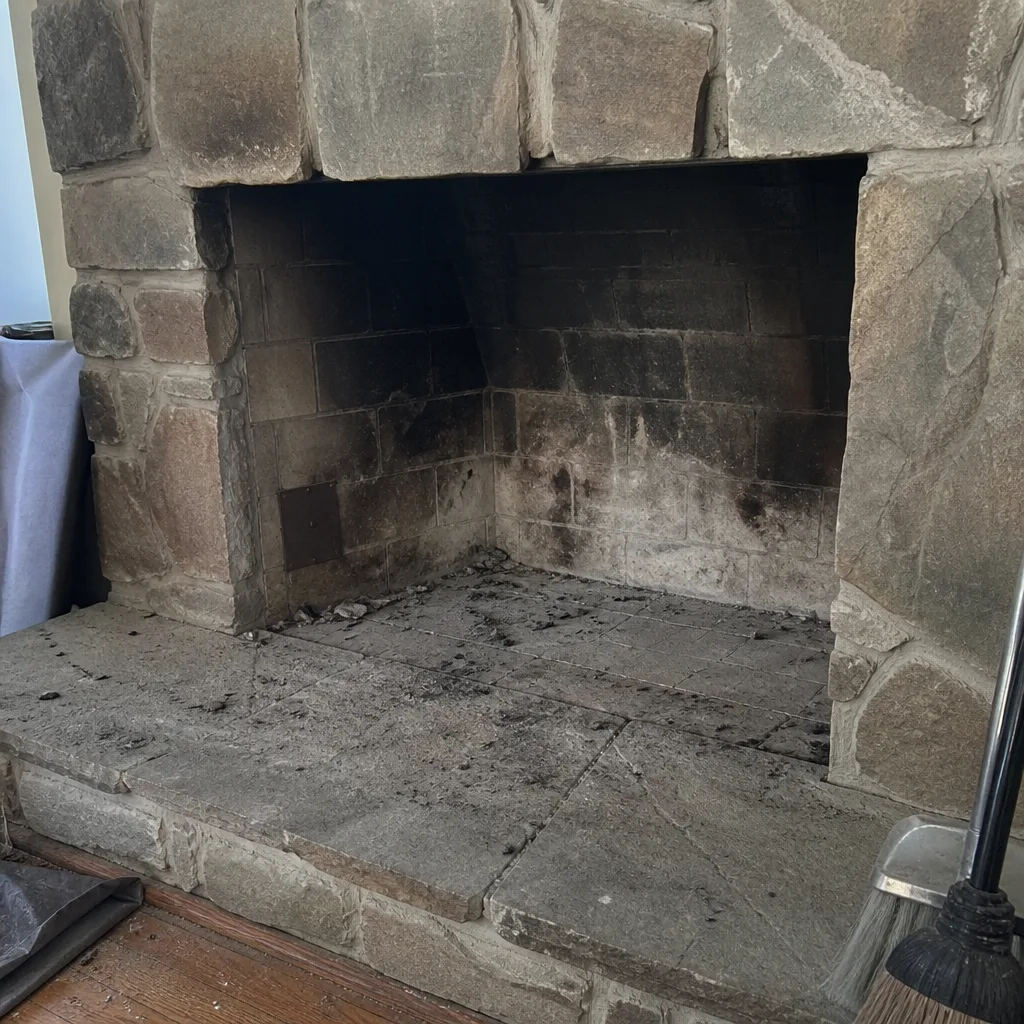 Before
 After
 Before
 After
When to Call a Professional
Some symptoms are worth watching. Some are worth a call right away. Call a professional if you notice smoke coming into the room when the fireplace is lit, especially if it happens consistently; if you smell a strong creosote or musty odor; if you see efflorescence, spalling brick, or a cracked or separated crown; if flashing is lifting; or if you’ve had a chimney fire of any size. A chimney sweep should also be on the schedule for any wood-burning system in regular use, and a camera inspection is the right move before you buy or sell a home with a fireplace. Norfolk Chimney Cleaning offers free estimates in Norfolk – call (844) 496-0079. We answer 24/7. Fast dispatch from 7am to 7pm, Sunday through Friday.
Frequently Asked Questions
Most wood-burning chimneys should be swept about once a year, or sooner if you burn often or notice creosote buildup. Gas inserts and appliances have their own service interval based on the manufacturer’s guidance. The best rule is to have an inspection tell you what your specific chimney actually needs rather than guessing by the calendar. Call (844) 496-0079 to book a sweep and find out what your flue contains.
Yes. White staining – efflorescence – is a sign that water is moving through the masonry and carrying dissolved salts to the surface. It’s a moisture signal, not cosmetic aging. The repair is to find and stop the entry point, usually at the crown or flashing. Call (844) 496-0079 for an inspection that pinpoints the source.
A clear chimney that still backs smoke into the room usually points to negative air pressure, especially in a well-insulated home. Exhaust fans, a tight building envelope, or a cold flue can cause it. It’s rarely the damper. A camera inspection and pressure assessment will show what’s happening. Estimates are free – call (844) 496-0079.
A sweep cleans the flue; a camera inspection shows what’s inside it. If you’re troubleshooting a symptom like odor, staining, or backdraft, or if you’ve had a chimney fire, you need the inspection. We offer inspection as a standalone service so you get an objective assessment first. Call (844) 496-0079 to schedule one.
Often, yes. Many masonry flues can be resurfaced with a system like HeatShield, or fitted with a stainless liner such as DuraFlex, without demolition. The right path depends on what the inspection finds. Call (844) 496-0079 for an evaluation of your options.
The two have different signatures. Creosote smells sharp and smoky; mold smells earthy and damp. Glazed creosote needs chemical treatment and a sweep, while a mold smell points to water infiltration. A camera inspection distinguishes them clearly. Estimates are free – call (844) 496-0079.
The Bottom Line
Most chimney problems homeowners notice are symptoms, and the fix that matters is the one aimed at the real cause. White staining means water is getting in, usually at the crown or flashing. Smoke in the room often means house pressure, not a failing chimney. The smell that seems like one thing is sometimes the other. Every diagnosis in this guide starts the same way: with a proper inspection that shows you what’s actually there. Our technicians have up to 15 years of experience, and our job is to find the cause before recommending the repair – whether that’s a sweep, a crown rebuild, or a HeatShield resurfacing that saves you a demolition. A clean chimney isn’t cosmetic. It’s a safety standard.
If you’re not sure what your chimney is telling you, call (844) 496-0079 for a free estimate. We answer 24/7. Fast dispatch from 7am to 7pm, Sunday through Friday. From first inspection to final repair, one specialist, one call.
Written by the team at Norfolk Chimney Cleaning.